ProVault
Empowering collectors through GameStop's peer-to-peer selling platform.
Harmony Simpson
Creative Director
Figma Make, Supabase,
Openai API, Photoshop
The Purpose
GameStop recently pivoted their market to the trading card community, but the category has a rich existing culture, trust systems, and existing marketplace habits.
As a team of 3, we we're tasked to help GameStop build trust as a newcomer to their new market, drive engagement to their digital touch points, and increase foot traffic to physical stores.
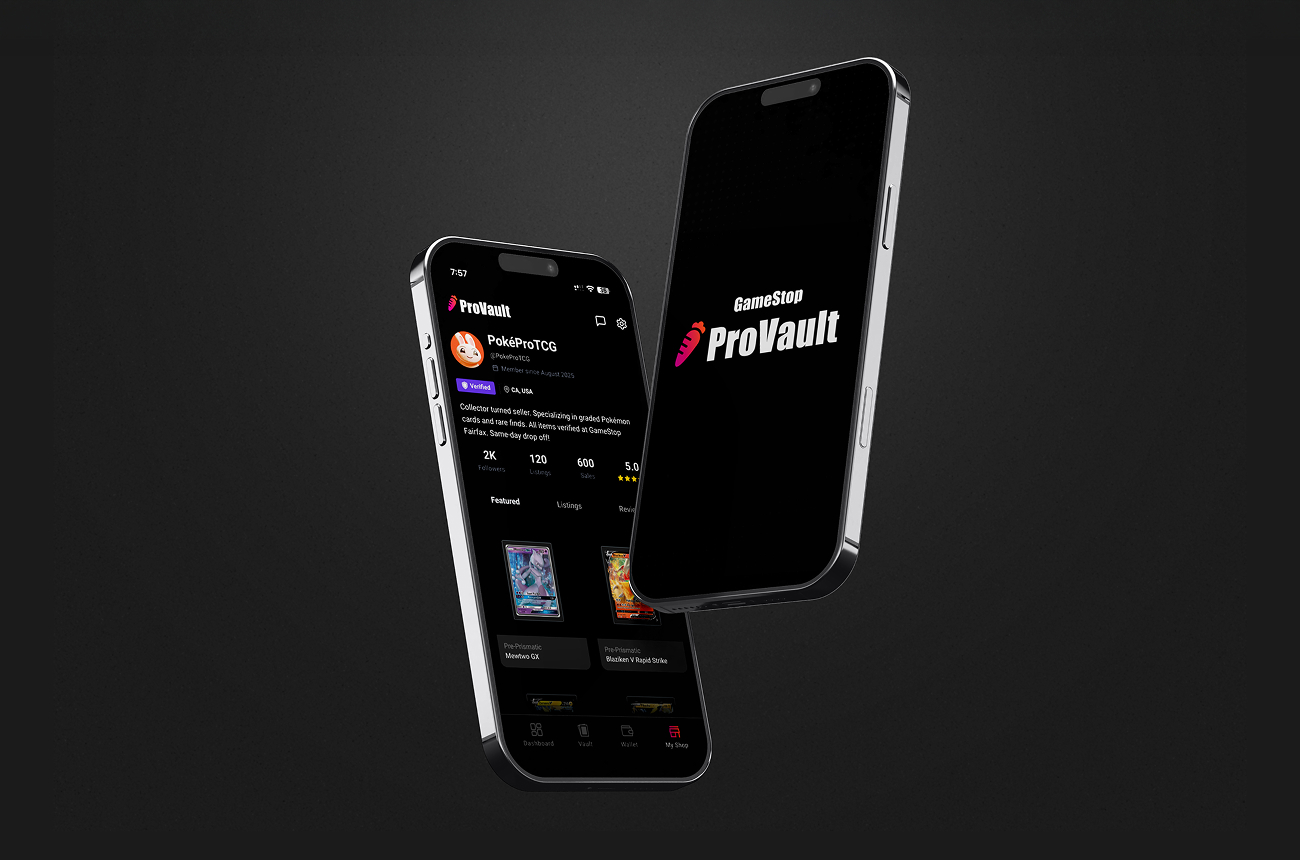
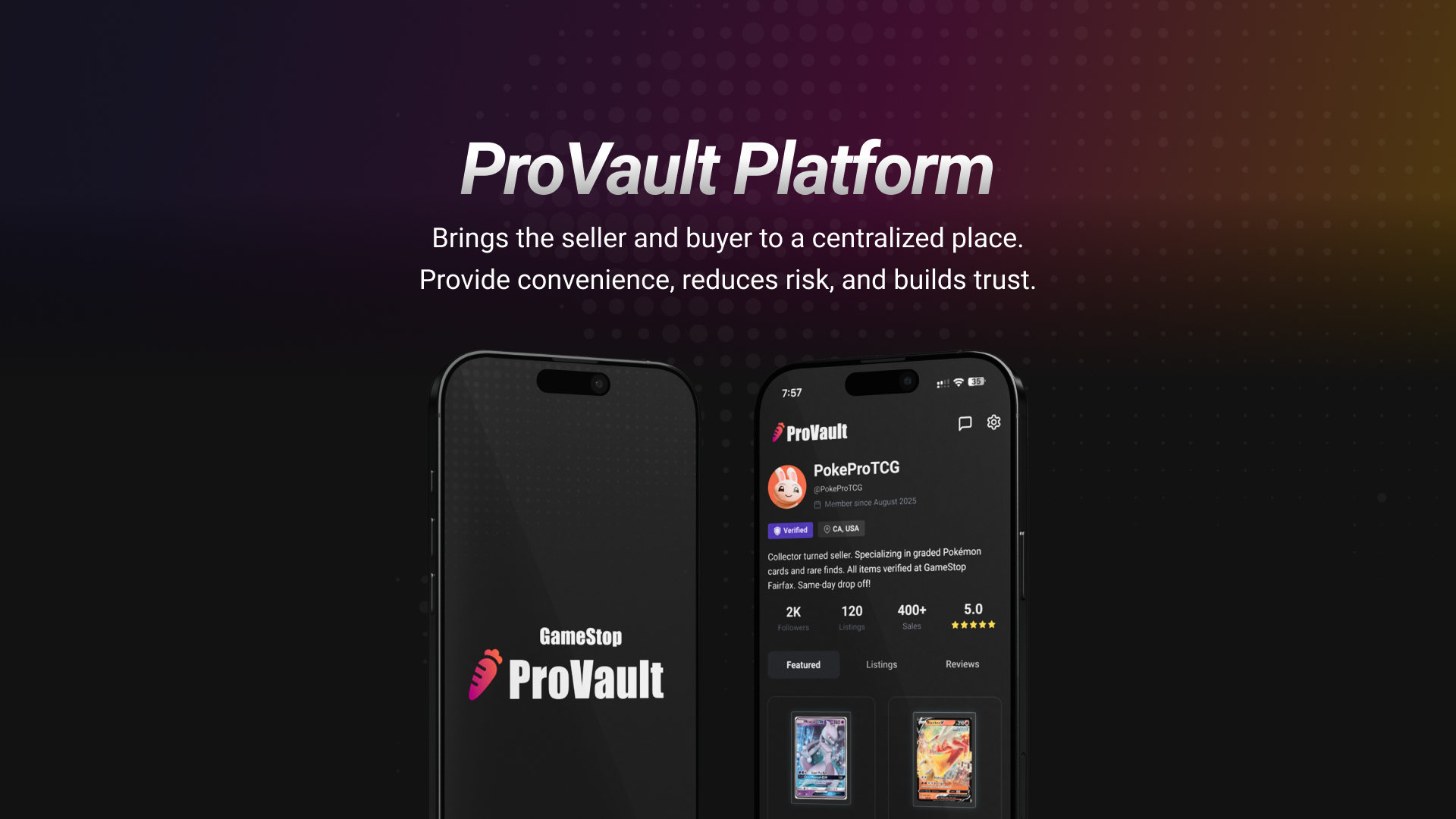
What we proposed was a P2P selling marketplace integrated into their existing app while leveraging GameStop’s physical footprint for item verification and order fulfillment.
GameStop is new to the TCG community. How can we drive digital engagement, physical foot traffic, and build trust with their new market audience?
01. The Research
The first four weeks of the project was dedicated JUST to research. The ProVault team was formed after the research phase, yet many of our findings overlapped and highlighted key patterns that informed our ultimate direction. Below is my personal research overview and the methods I employed.
Becoming a Collector
I’ve been adjacent to TCG culture for a while. I loved the card design and the obsession around it, but I never had the time or motivation to learn to play and actually nerd out.
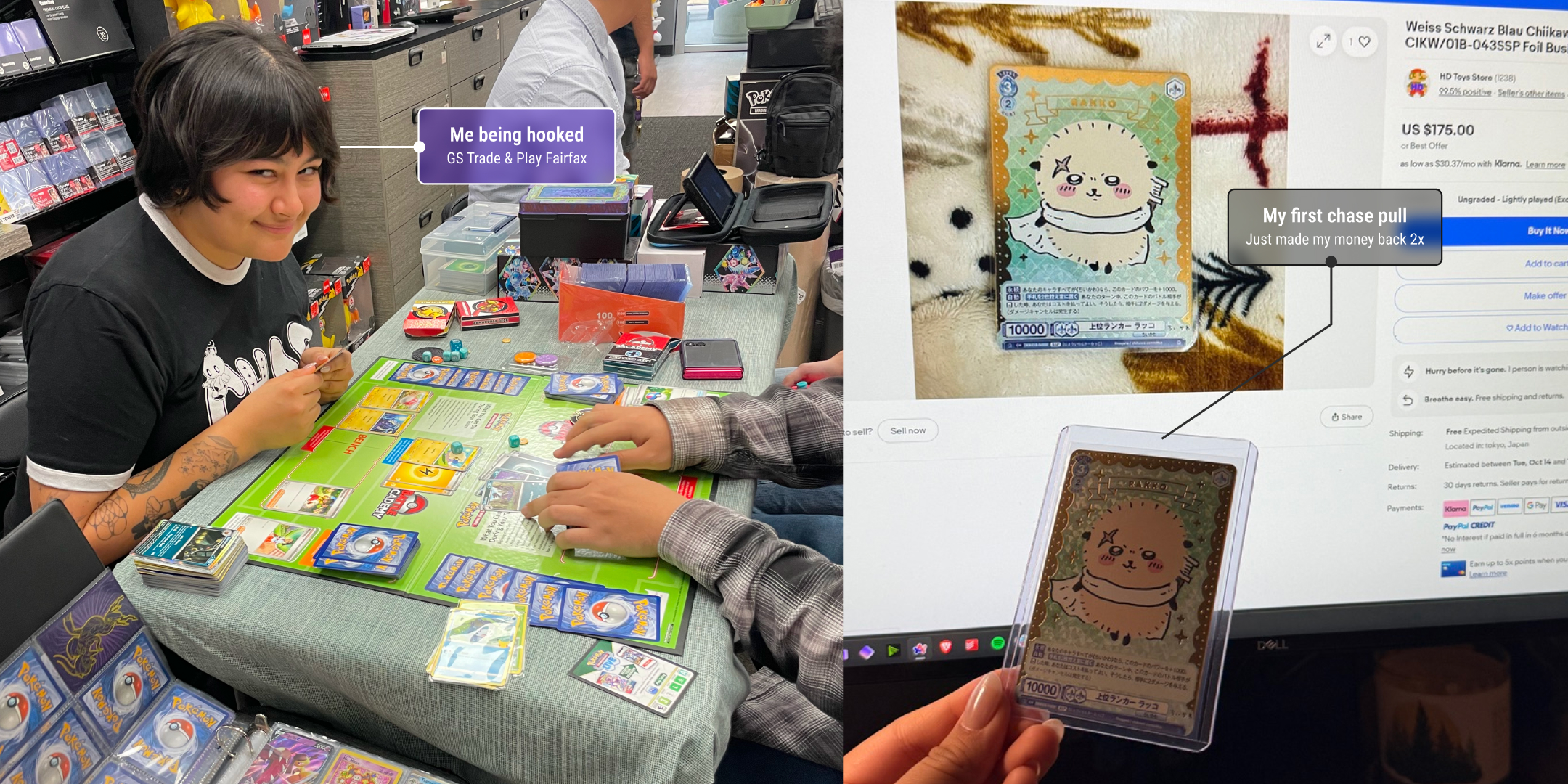
For this project, I used it as an opportunity to become the user (and spend my money). I bought booster packs, “chased” my grail cards, and felt the gambling thrill of ripping packs for the first time. It immediately clicked why people get hooked.
Somehow, I ended up pulling my chase card which was worth around $100. I made the money I spent on packs, back twice. That moment embodied how collecting is part taste, part ritual, and a lot of gamble. This changed how I think about the value, risk, and trust that goes into purchasing these packs. It's all about the hope of pulling more than a cool card, but the jackpot.
Field Research & Interviews
We visited three in-person TCG spaces: Fairfax GameStop, the Front Row Card Show in Pasadena, and a Pokémon event in Burbank. I spoke with six people across collectors, vendors, sellers, and investor-minded buyers. I focused on how they evaluate value, what triggers trust or distrust, and why many people still hesitate to sell even when they own high-value cards.
Netnography
We analyzed primary community sources across Reddit, X, Discord, and dedicated TCG forums to understand how collectors talk to each other. Jon supplemented this with secondary research on selling behavior and relevant academic studies, which helped validate patterns we observed.
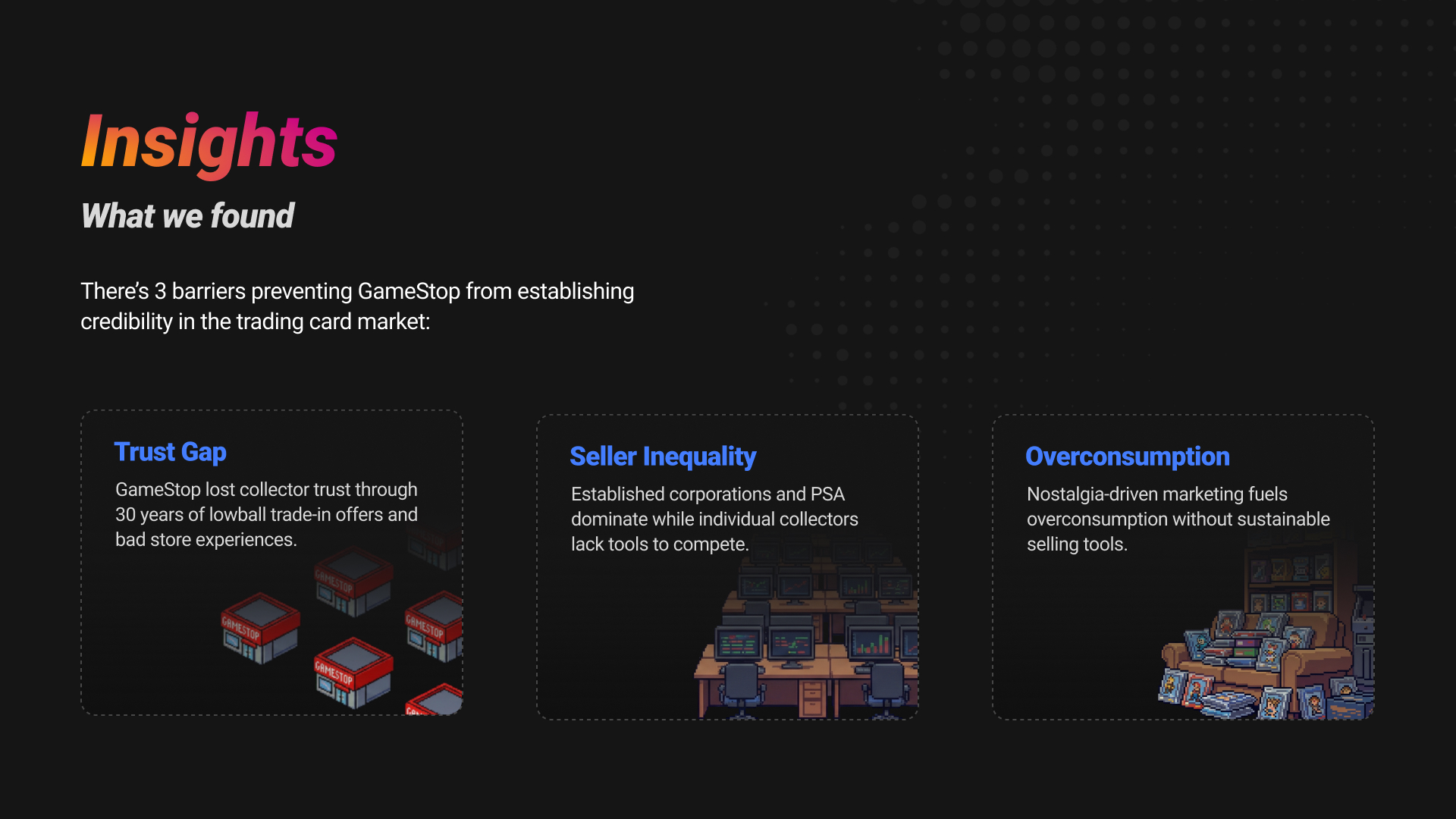
Collectors have a structural distrust of GameStop because it's viewed as a profit-driven company, not a person.
Belifes that GameStop profit from information gaps and are associated with lowball trade-in values.
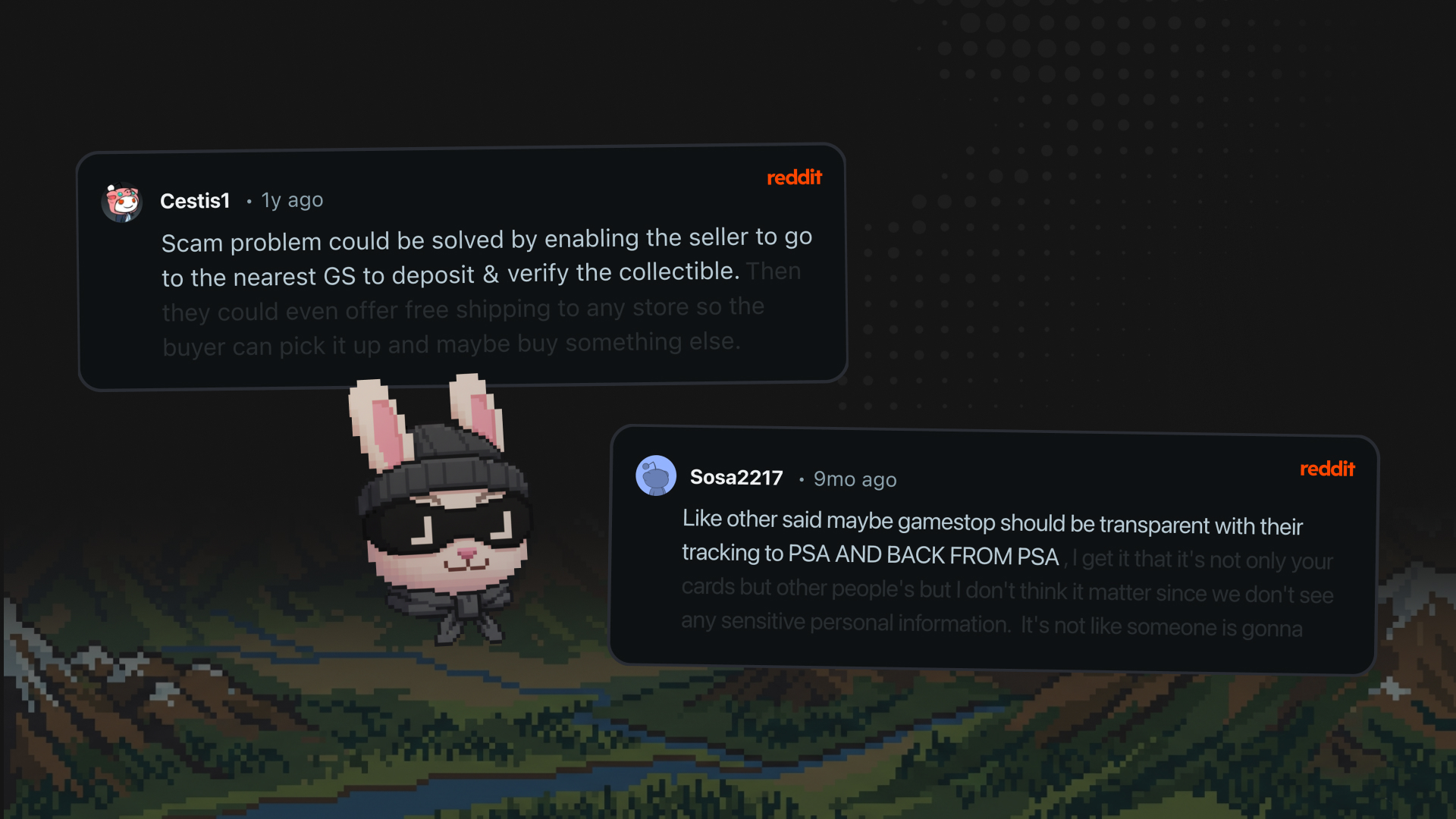
Sellers fear getting “peanuts” for assets, so they default to independent P2P platforms to keep control and leverage.
The consistent ask is transparency, proof of fair value, and trust mechanisms that prevent lowballing and scams.
Collector Survey
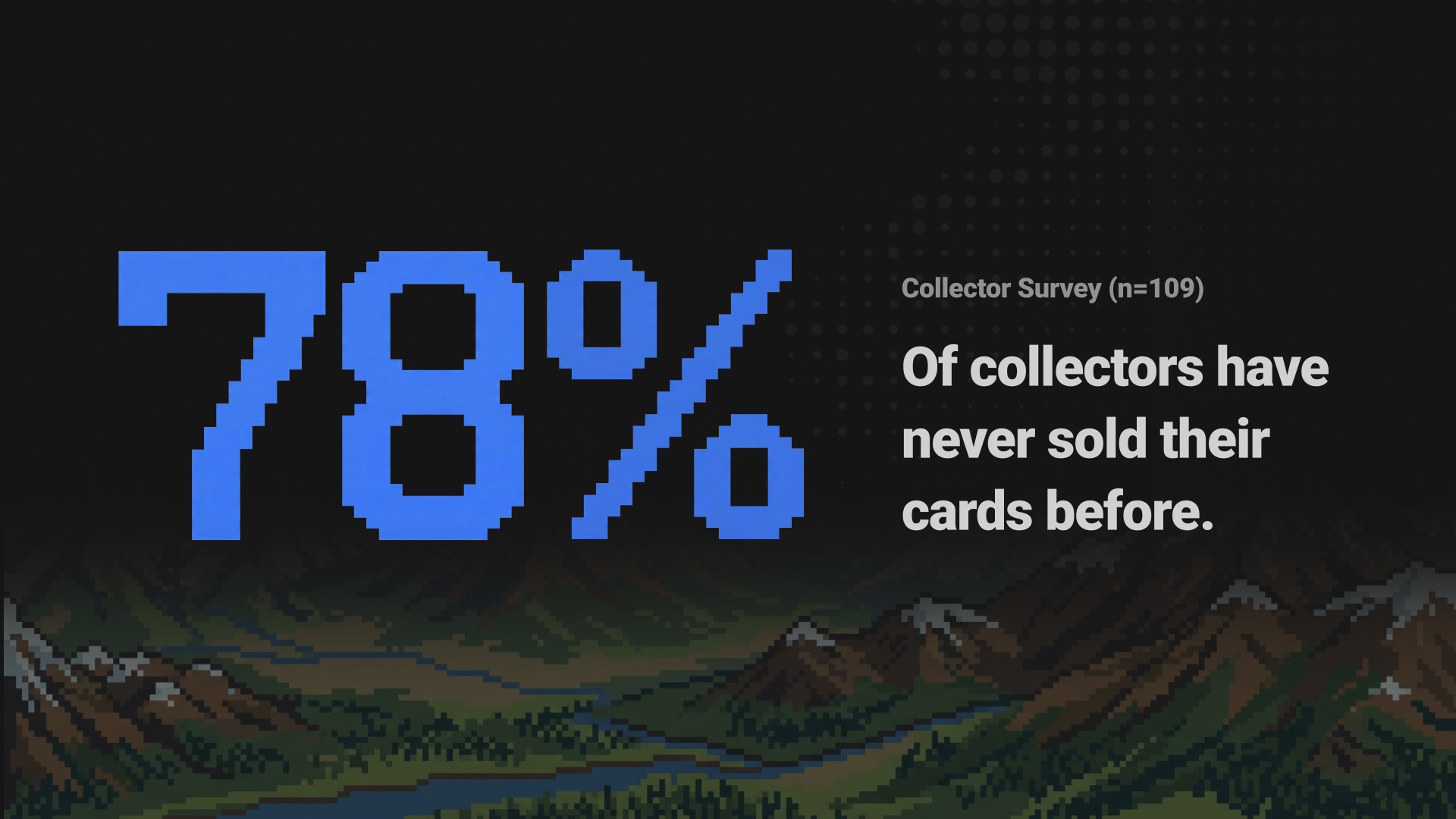
I ran a collector survey via Typeform with 109 responses from target-aligned collectors to quantify how people collect, value, and sell. The results mapped baseline behaviors and surfaced where collectors place trust, including how GameStop is perceived compared to local card shops and major platforms like eBay. This gave us clear behavioral context to validate patterns we were seeing in interviews and field research.
Competitive Analysis
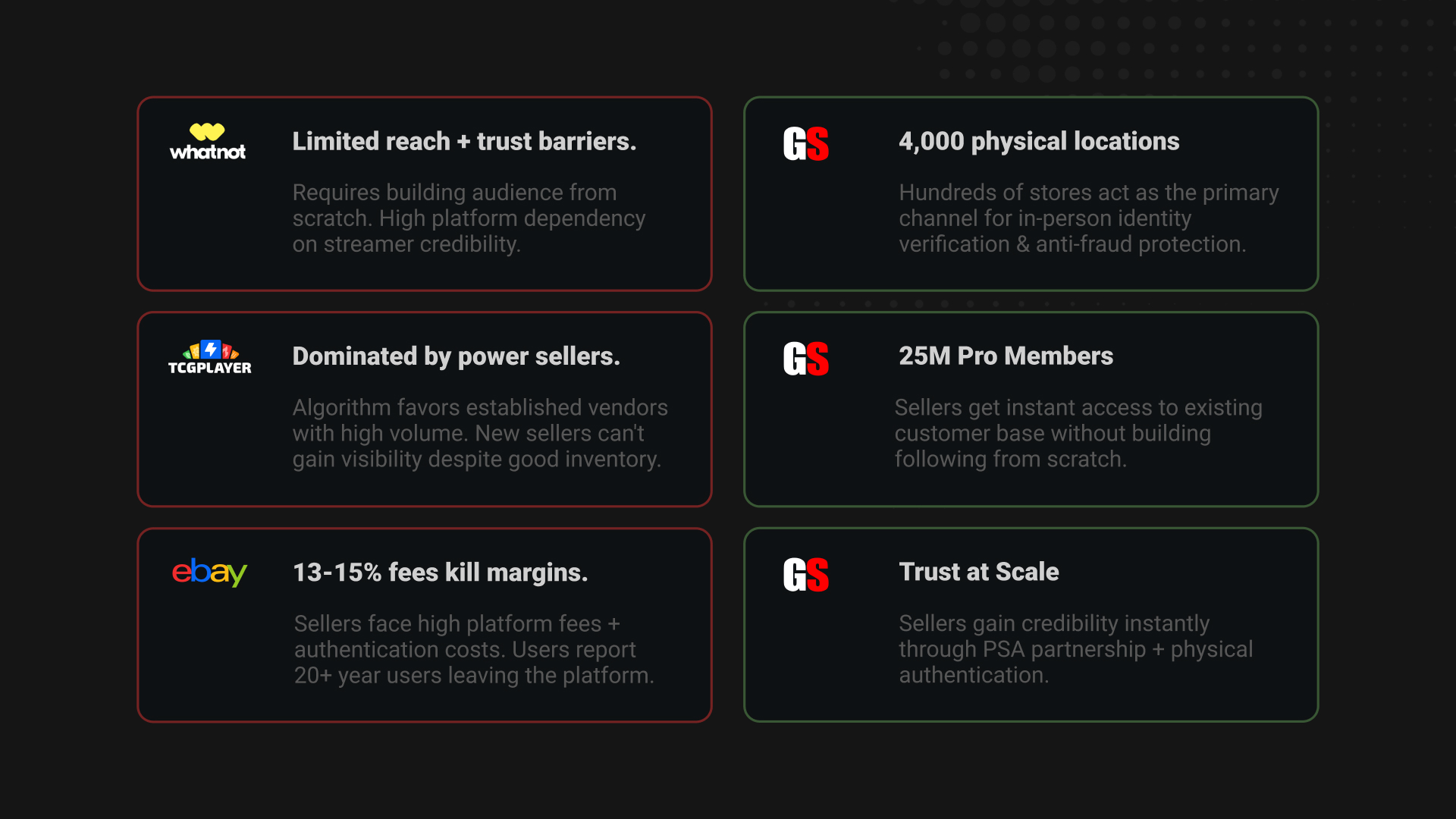
Jon led a competitive analysis across marketplaces including eBay, Whatnot, TCGplayer, Depop, Etsy, and Collectr to map how people sell collectibles today and where the friction lives.
Competitors force sellers into tradeoffs: high fees that kill margins, algorithmic visibility that favors power sellers, and audience-building pressure that blocks casual collectors from ever selling.
GameStop can solve what they cannot by combining in-store verification and secure handoff with store-to-store logistics and an instant customer base.
02. The Approach
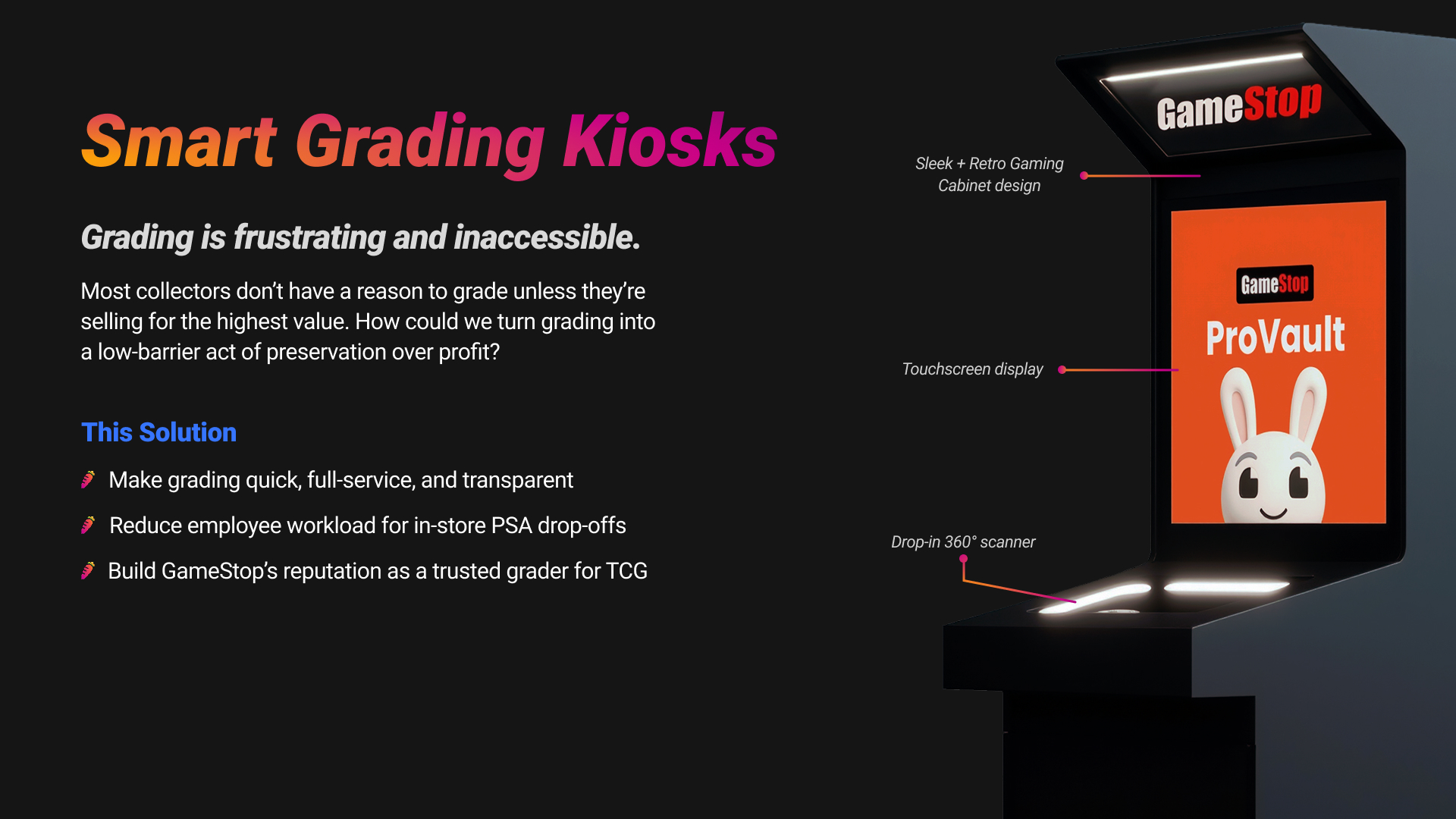
Before the group formation, my initial proposal centered on a GameStop in-store grading kiosk designed to make grading feel immediate, transparent, and accessible. The kiosk would let collectors securely drop off cards and receive a same-day grading outcomes. The kiosk would also function as a secure pickup and drop-off node for PSA staff and shipment couriers, tightening chain-of-custody and reducing shipping anxiety.
Early ideation: AI Grading Kiosks
The kiosk would aggregate market data and quality signals to generate a rough value and grade estimate before a user commits to paying for grading. It would also surface the reasoning behind the grade through a visual issue map, showing what defects were detected and how they affected the score.
Aligning with Client
Once ProVault teamed up, we aligned on the seller dashboard as the core product and decided what features could earn trust and drive adoption. We merged pieces of our original concepts into the dashboard vision.
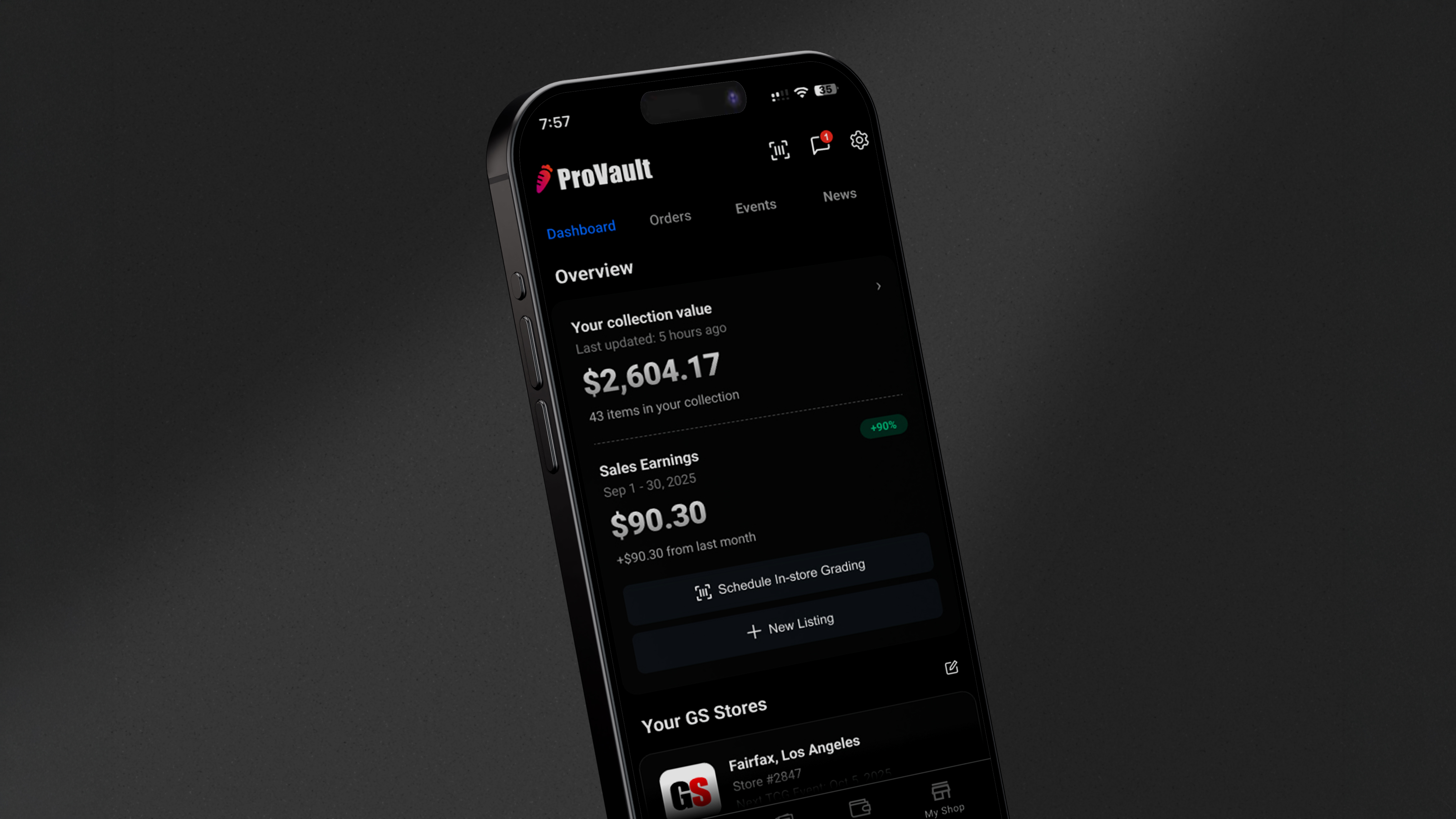
My grading kiosk idea evolved into a scannable pre-estimate and inventory system that lets collectors digitize their binder, understand rough value before committing to selling or grading, and manage listings from a centralized vault.
User Journey
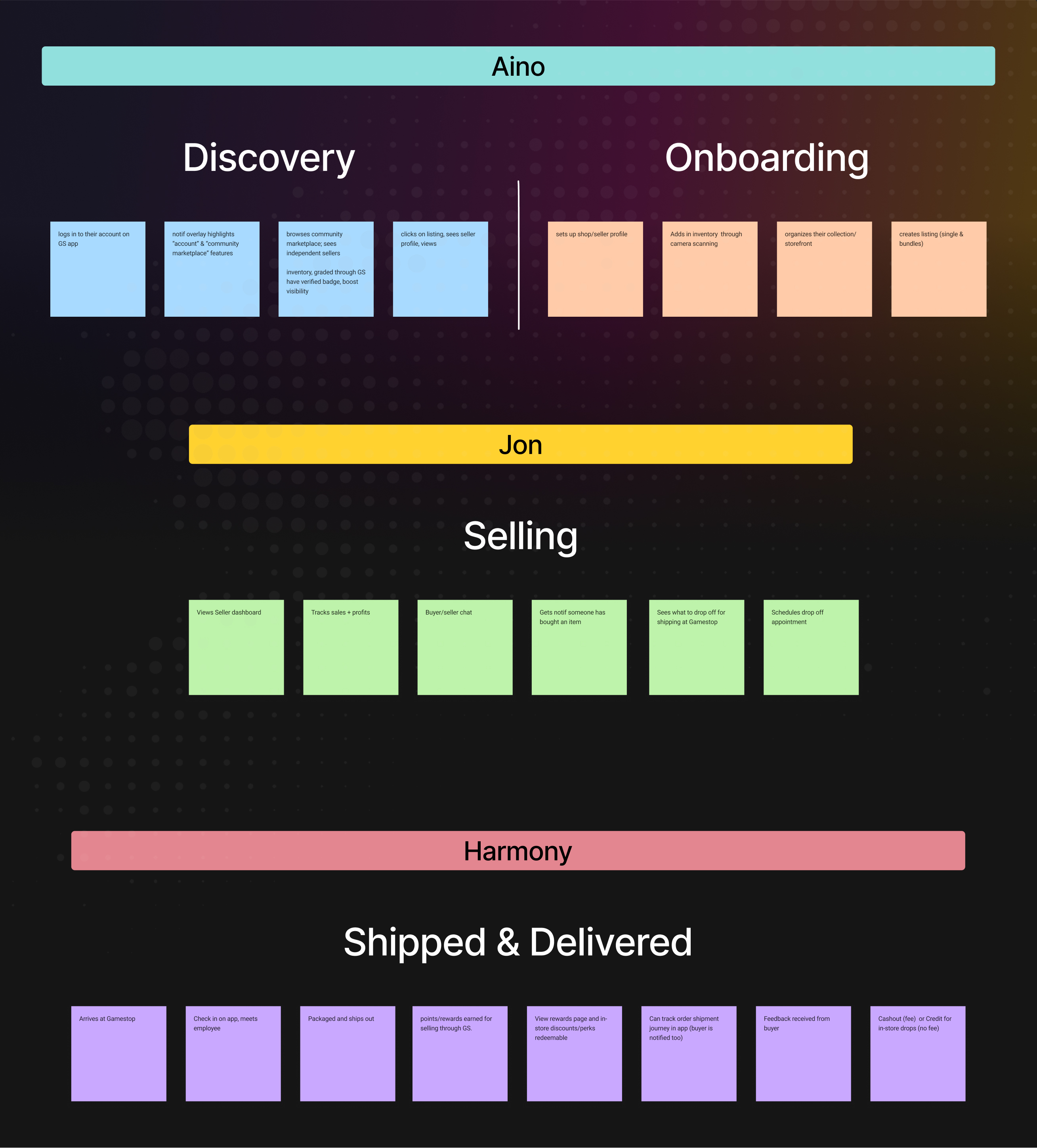
We mapped the end-to-end ProVault journey to capture user intent at each phase, from discovery and onboarding through listing, negotiation, and drop-off. The goal was to make the path from “I might sell” to “I got paid” feel predictable, with clear trust checkpoints that move users into a GameStop store for verification.
This journey map became our blueprint for prioritizing screens, defining handoffs, and ensuring the experience stays coherent across the app, in-store interaction, and fulfillment.
Primary Screens
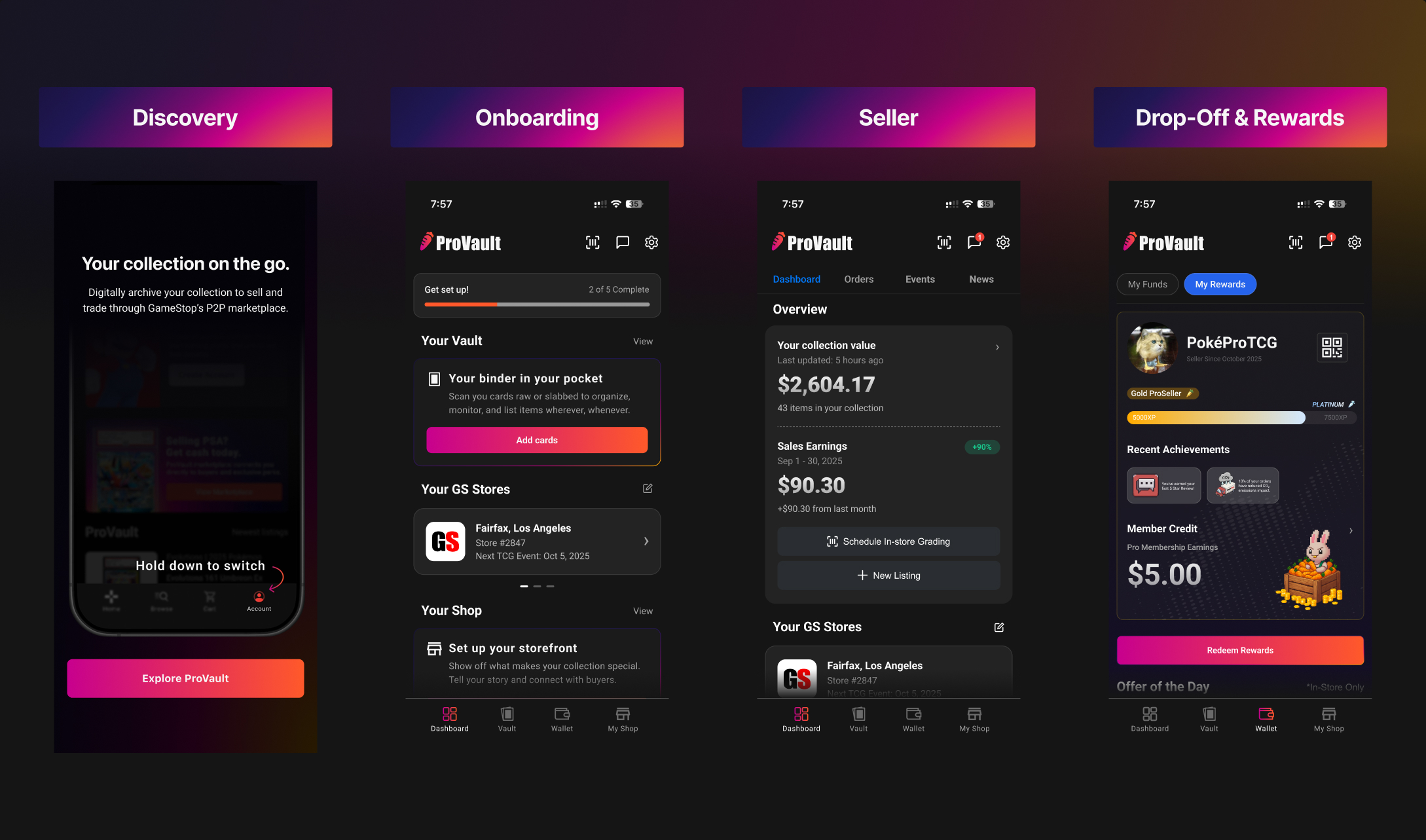
We designed the primary screens spanning discovery, onboarding, seller dashboard, drop-offs, and rewards. This MVP was needed to validate the concept in usability testing without skipping the trust-critical steps. Locking these screens gave us a stable prototype baseline to test comprehension, confidence, and conversion from “browse” to “verified drop-off” to payout.
03. The Results
Once the design phase wrapped, we shifted into validation through testing. The client recruited and managed their own testing pool and ran a week of usability sessions using our prototypes. When the feedback came back, it validated the core concept and showed strong user readiness for a trusted peer-to-peer selling flow.
Final Prototype
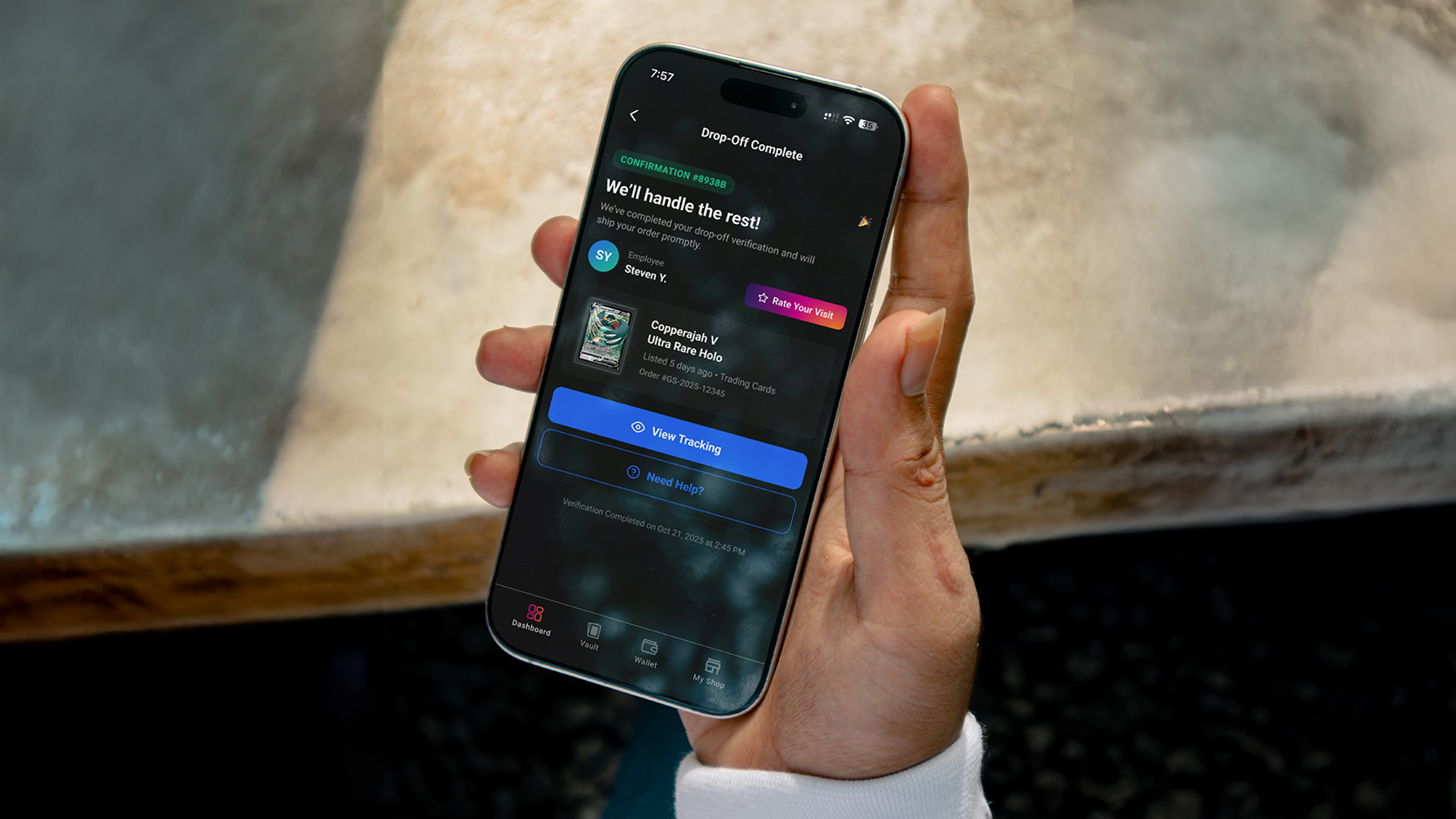
We built the prototype to behave like the real product. The prototype is fully clickable across the full selling loop so participants could explore, make choices, and recover from mistakes without instructions. That let us observe natural behavior, where users hesitated, what they trusted, and which screens needed refinement before iterating.
Building Our Testing Platform
We had no budget for an unmoderated testing tool, so I built one. In one week, I designed and shipped a two sided platform using Figma Make plus custom code. The platform captured both behavioral data and direct user input, letting us evaluate where people hesitated, what they understood immediately, and what broke trust.
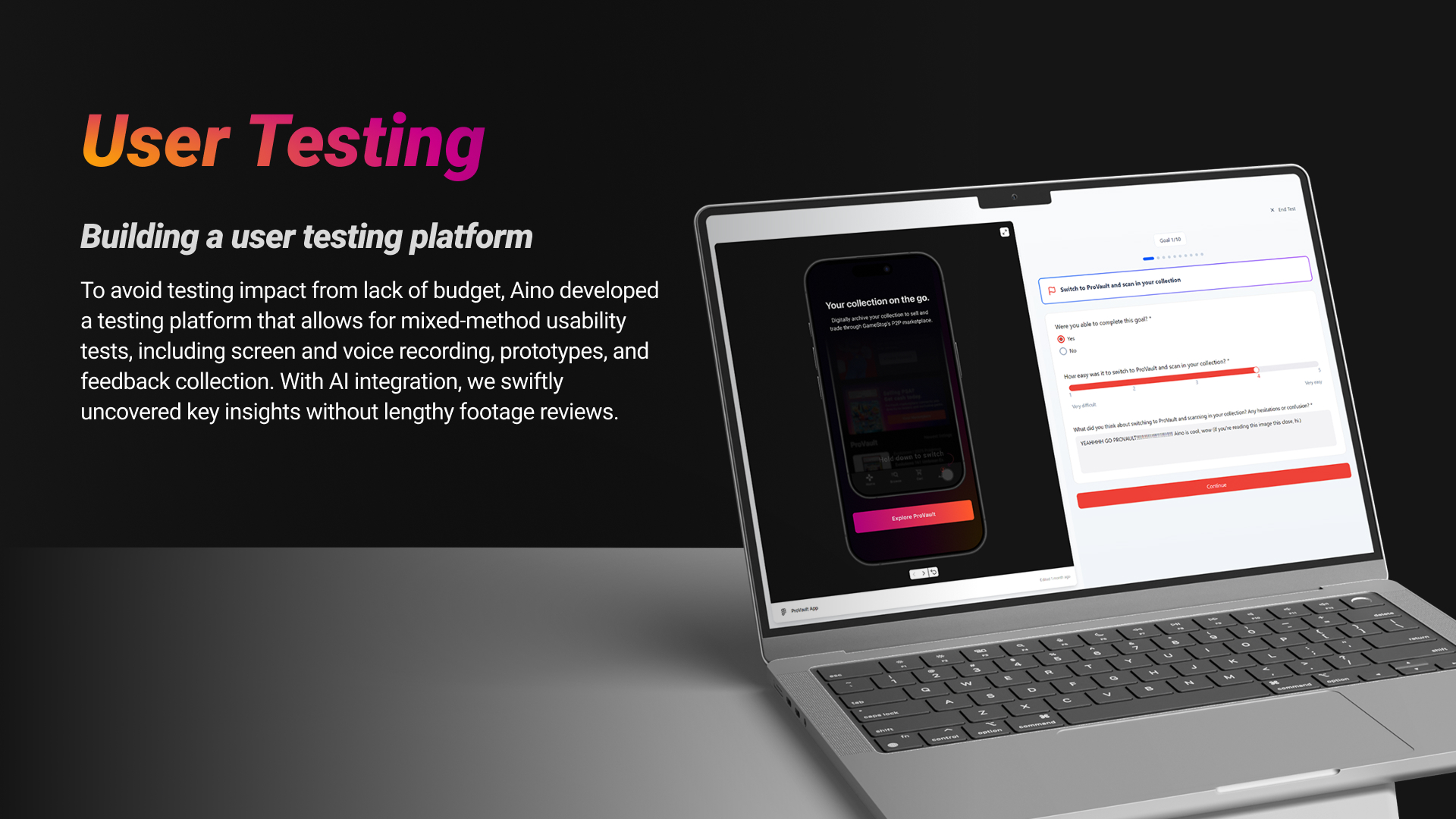
Screen recording captured real user behavior end to end, so we could review hesitation, misclicks, and navigation patterns.
Each task included structured written prompts plus optional voice notes to capture rationale, confusion, and sentiment in the moment.
The Figma prototype was embedded directly in the platform so participants could interact naturally without switching tools or losing context.
AI analysis summarized sessions into repeatable themes, surfacing top pain points and wins without manual transcript grinding.
Usability Test Results
Participants could move through the flow with minimal confusion, understood the value exchange, and consistently called out the transparency and verification steps as the trust builders.
More interesting than the UI notes were the reactions to the model itself. People framed ProVault as a potential market shift, replacing the usual buyer versus seller tension with a collector to verifier to collector loop where legitimacy is built into the transaction itself.
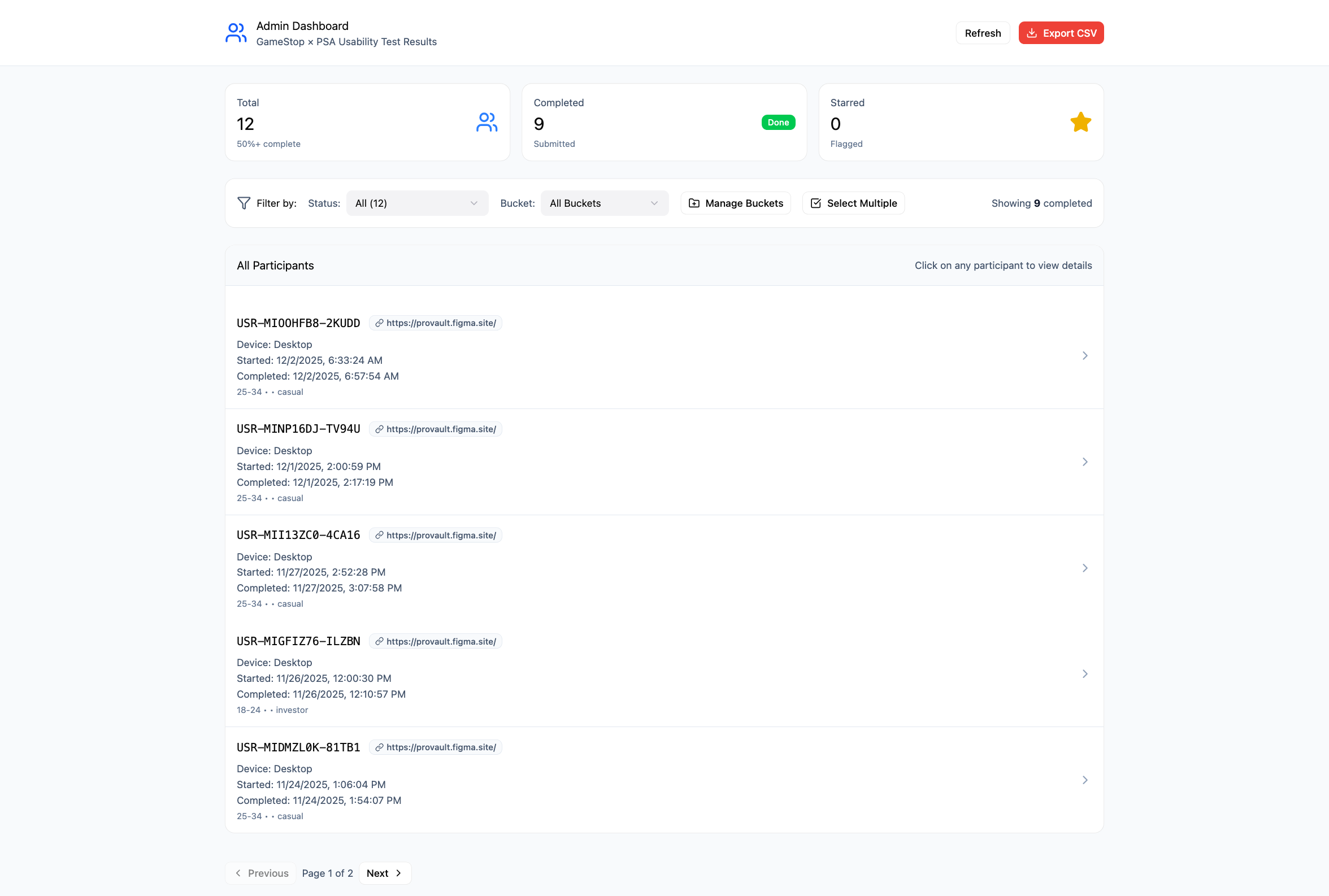
Feedback
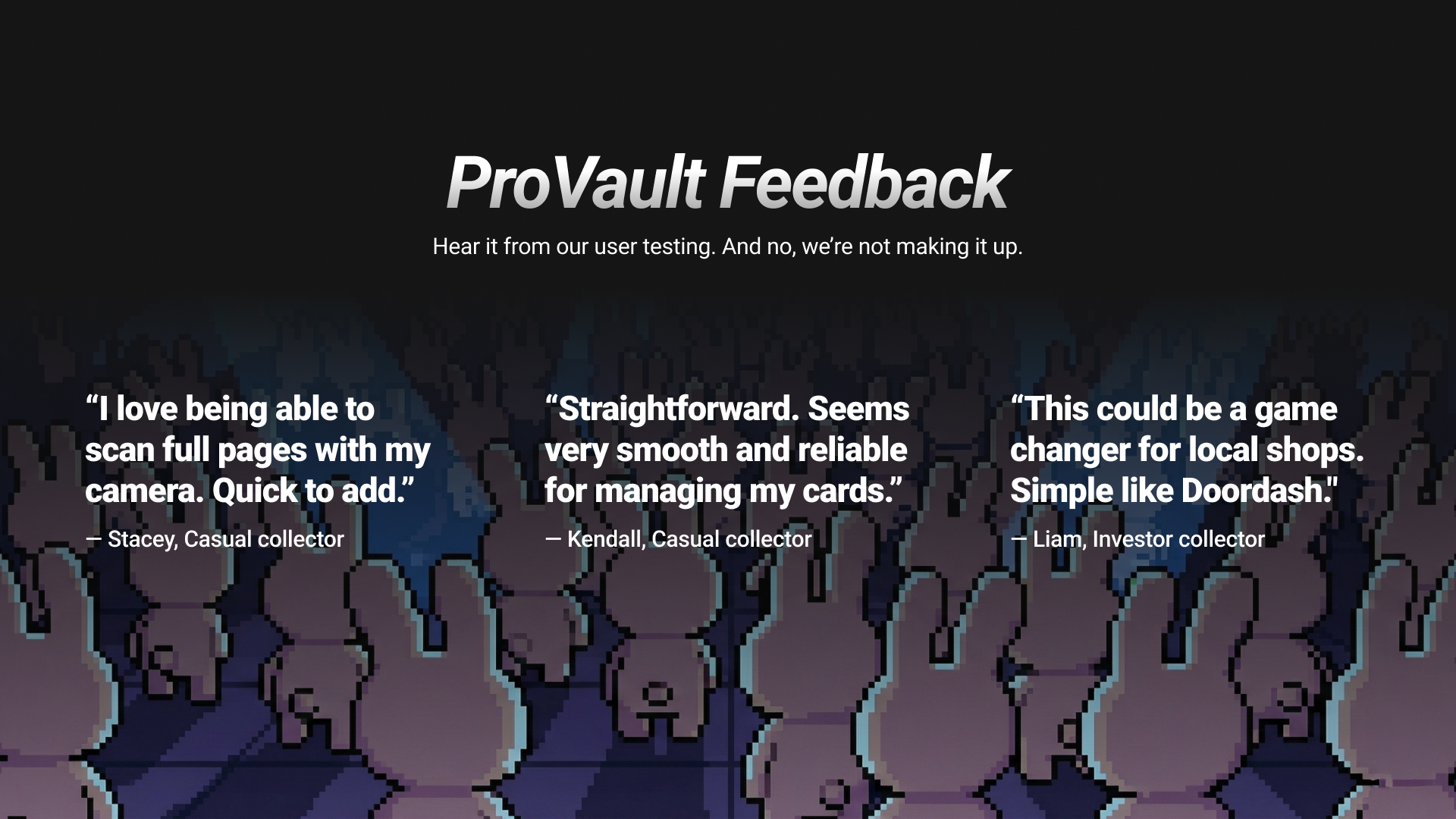
Users repeatedly called out the scan-to-add interaction as fast and satisfying, described the overall flow as straightforward and reliable for managing a collection, and reacted to the concept as genuinely “game-changing” for smaller shops and everyday collectors.
Gallery
A few key screens from the final ProVault prototype, showing the end to end flow from discovery to drop off, verification, and payout.