The Eon Phone
Exploring the future of personal phones.
Context
For this introduction in to the Archeology of the Futures assignment, we were tasked to create a 2D matrix and utilize the Possible–Plausible–Probable cone to identify a future object related to our inquiry. This is the object question I explored:
What does the future of personal phones look like?
I chose this path because of recent pushes from tech giants moving into more of a hardware focus in their approach to AI. We are hearing reports of OpenAI developing pins, speakers, Google returning to their Glasses, Apple creating their own glasses, and so many other redundant ideas for the "wearable AI" emergence.
Exploration
I began by identifying and creating a 2D matrix launch an investigation into the future of phone design. I utilized the lenses between attachment: dependence to independence, and the physicality of operation: hands-on to hands-off.
2D Interactive Future Matrix
Requiring manual input for activation.
Requiring no input for activation.
The phone does not depend on our interaction to complete a task.
The phone depends on our interaction to complete a task.
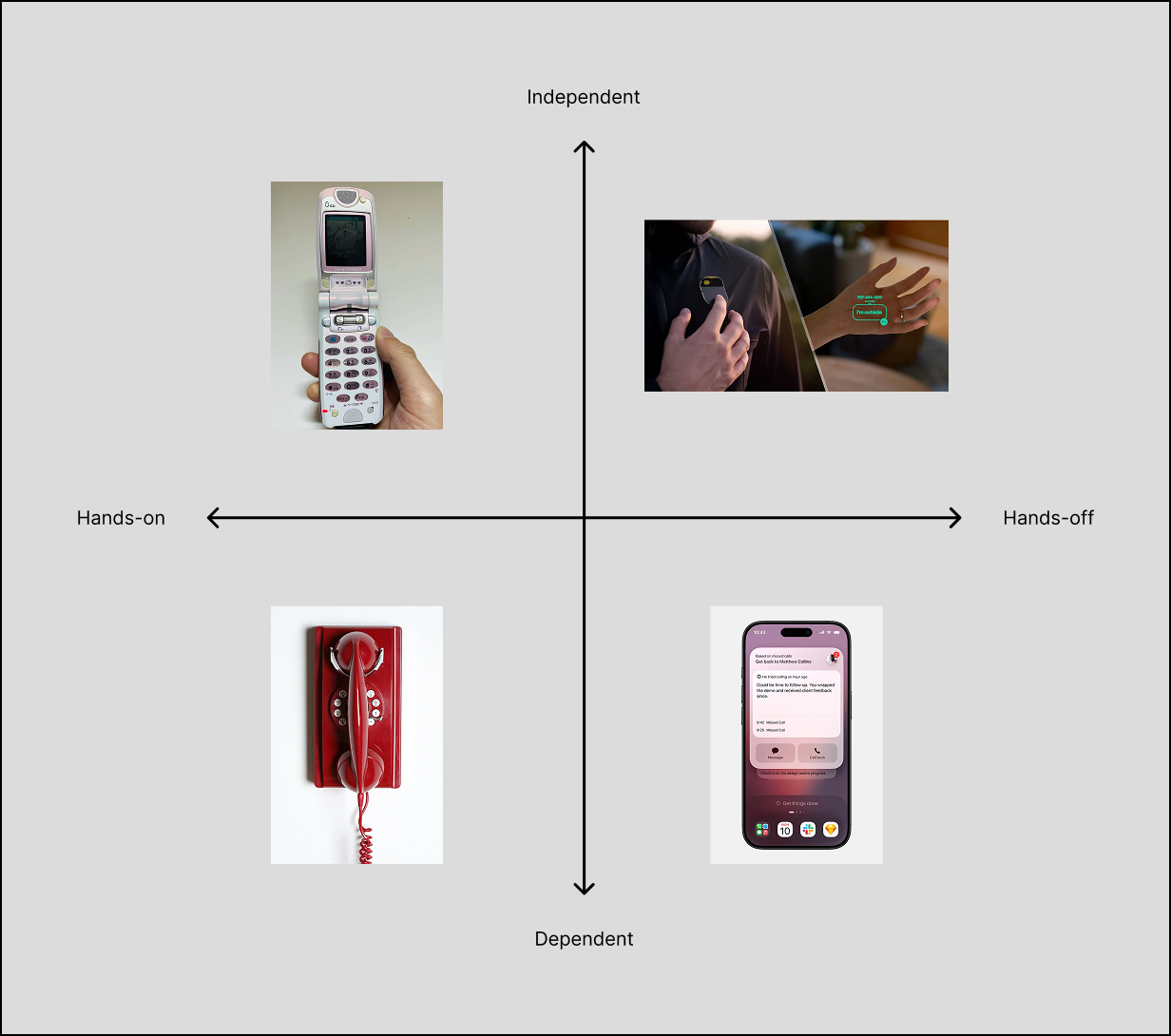
The Future Cone
Touchscreen phones with built-in assistants that speed up workflows and task completion.
Neuro-interfaced computing, Chip augmentation, rejection of technology, mass return to the analog, touch-less phones, optic-computing.
Phone-robotics, audio-computing, AI-first phones, agentic phones, autonomous phones that "see" your world, AR-first computing.
AI-first human activated phones, agentic task completion, predictive assistance, minimal footprint, just-in-time surfacing and information relevance.
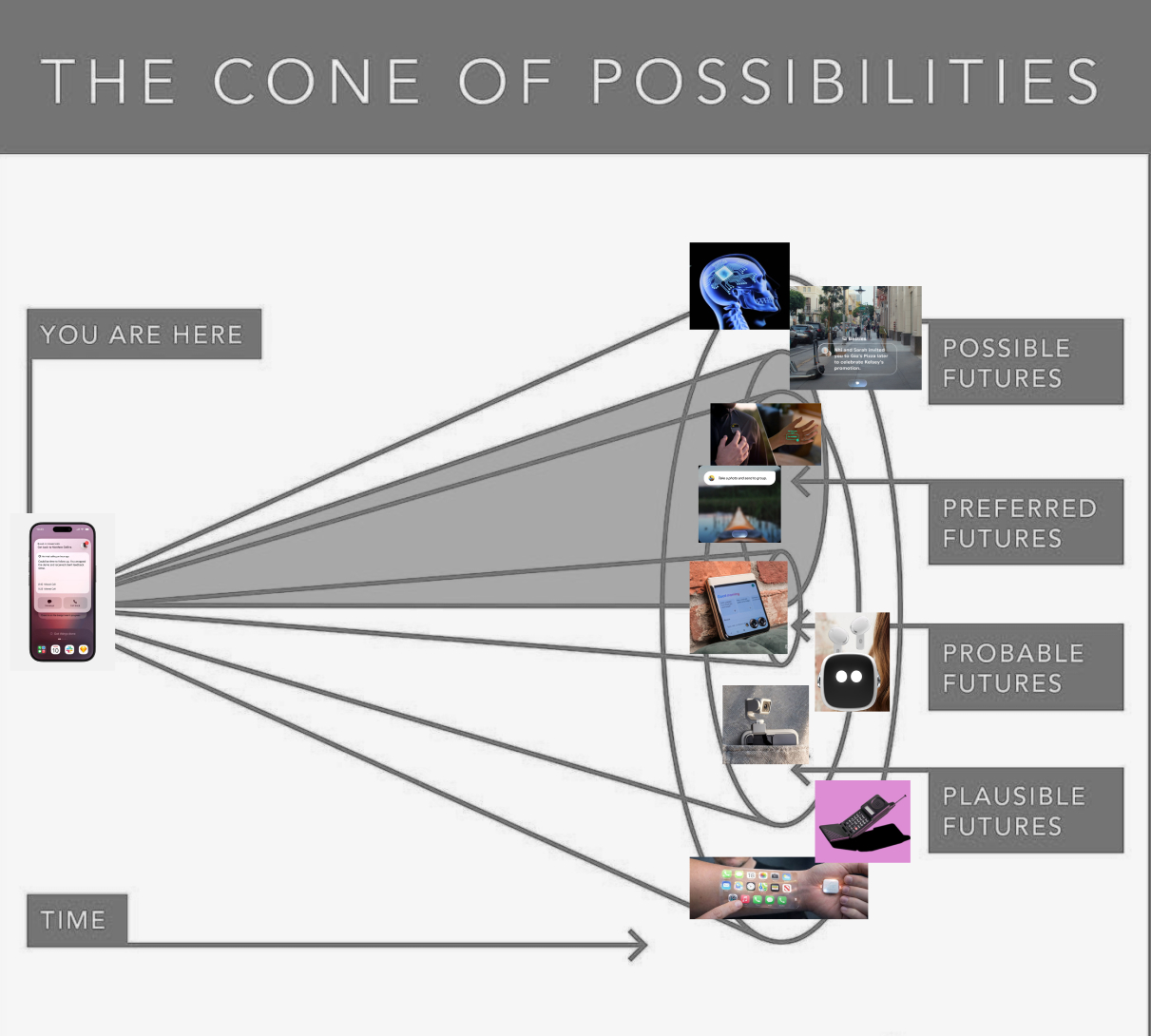
The Object
The Eon Phone
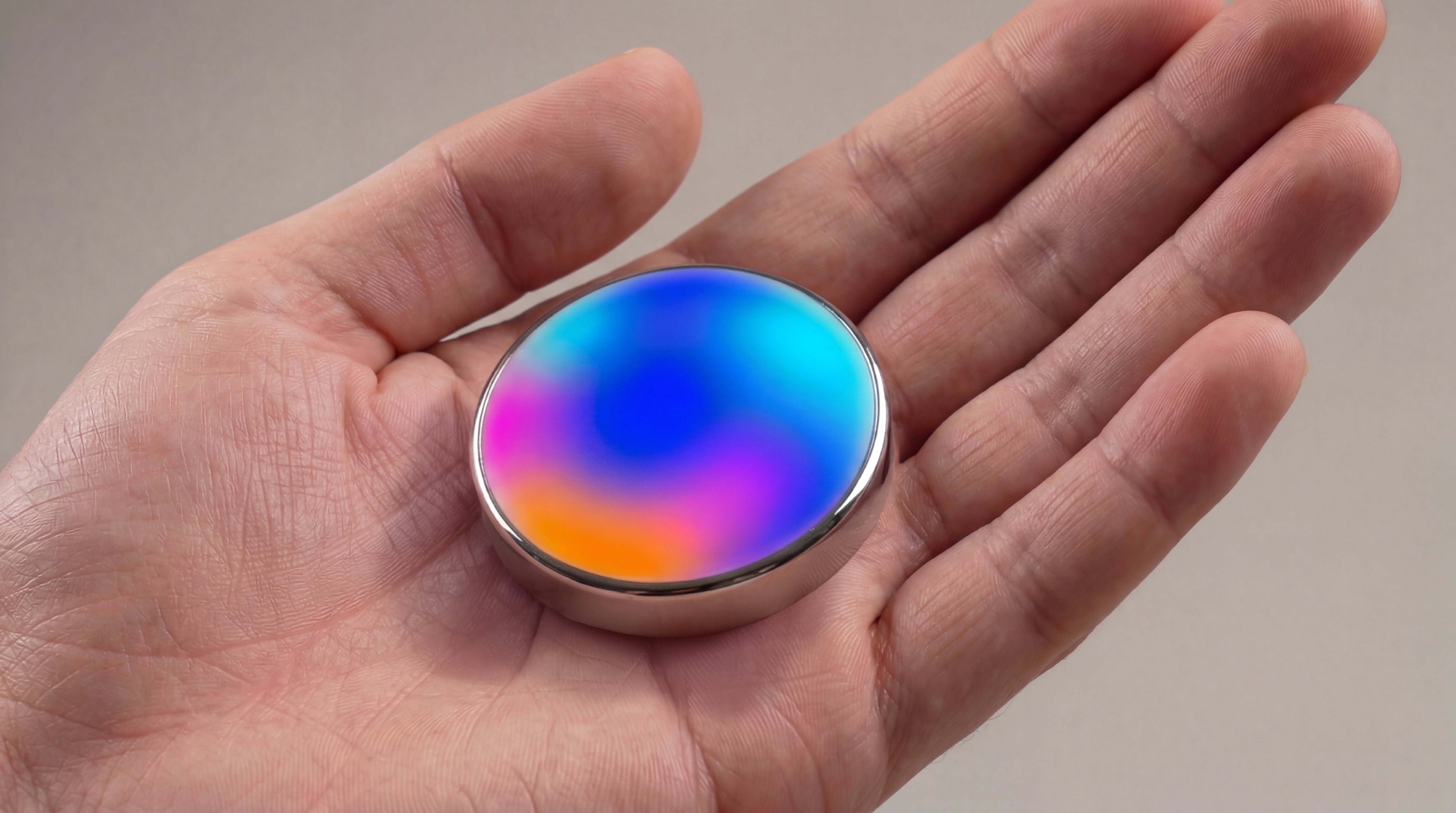
Derived from the initial matrix and future forecasting, Eon represents a shift from reactive hardware to proactive, ambient technology. Situated in the preferable future, the concept dismantles the current paradigm of screen dependency. By utilizing agentic computing, Eon acts as an autonomous delegate rather than a passive tool, allowing users to decouple from a centralized interface while maintaining the organizational benefits of an intelligent system.
Industrial Design and Visualization
The industrial design of Eon was conceptualized to be unobtrusive and highly tactile. The physical modeling process utilized Spline and Blender to establish a minimal hardware footprint that invites casual handling rather than intense visual focus.

Building in Unity
*Click on images for full build documentation/process.
The technical execution began with establishing the user's presence within the speculative space. I configured a first-person perspective to simulate the "human" element of the Eon system. This involved scripting the camera and WASD controls in C#, focusing heavily on the calibration of look and walk sensitivity. The goal was to ensure the movement felt "natural" rather than "game-like," allowing the user to focus on the environment rather than the mechanics of navigation.
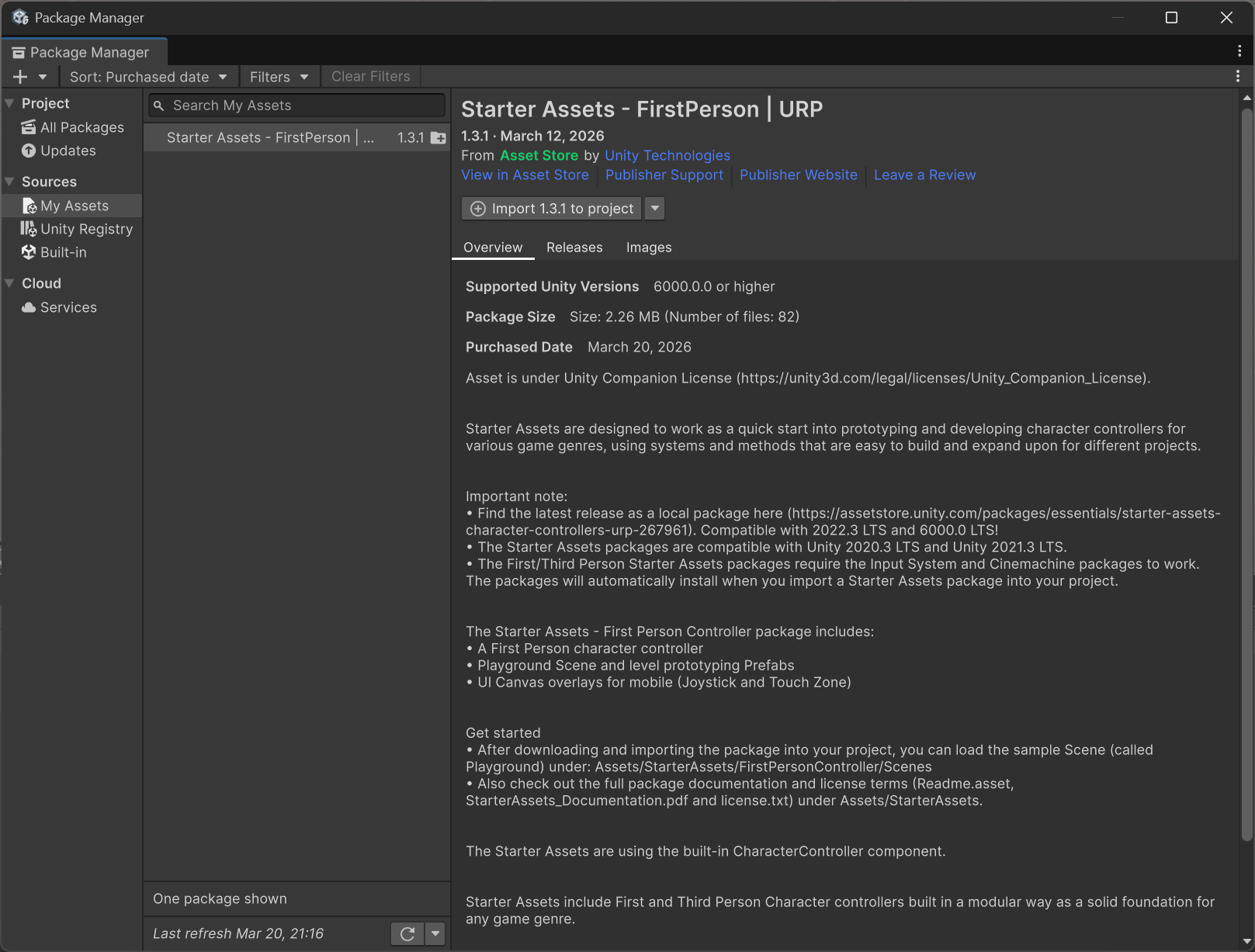
Initially, I attempted to construct the interior environment from scratch; however, to maintain project velocity and focus on interaction design rather than structural modeling, I pivoted to adapting a foundational 3D room model. This required a substantial "re-design" phase to align the asset with the Eon vision.
I stripped away "dated" elements, such as traditional dressers, to move the scene toward a more timeless, minimal aesthetic. A primary modification involved extending the mirror to fill an entire wall, creating the "Smart Mirror" interface necessary for the simulation. A significant technical hurdle during this phase was managing "baked" lighting; removing objects left ghost-shadows in the scene. I troubleshooted this by regenerating the lightmaps to account for the new spatial layout, ensuring the ambient glow felt consistent with the "calm tech" theme.
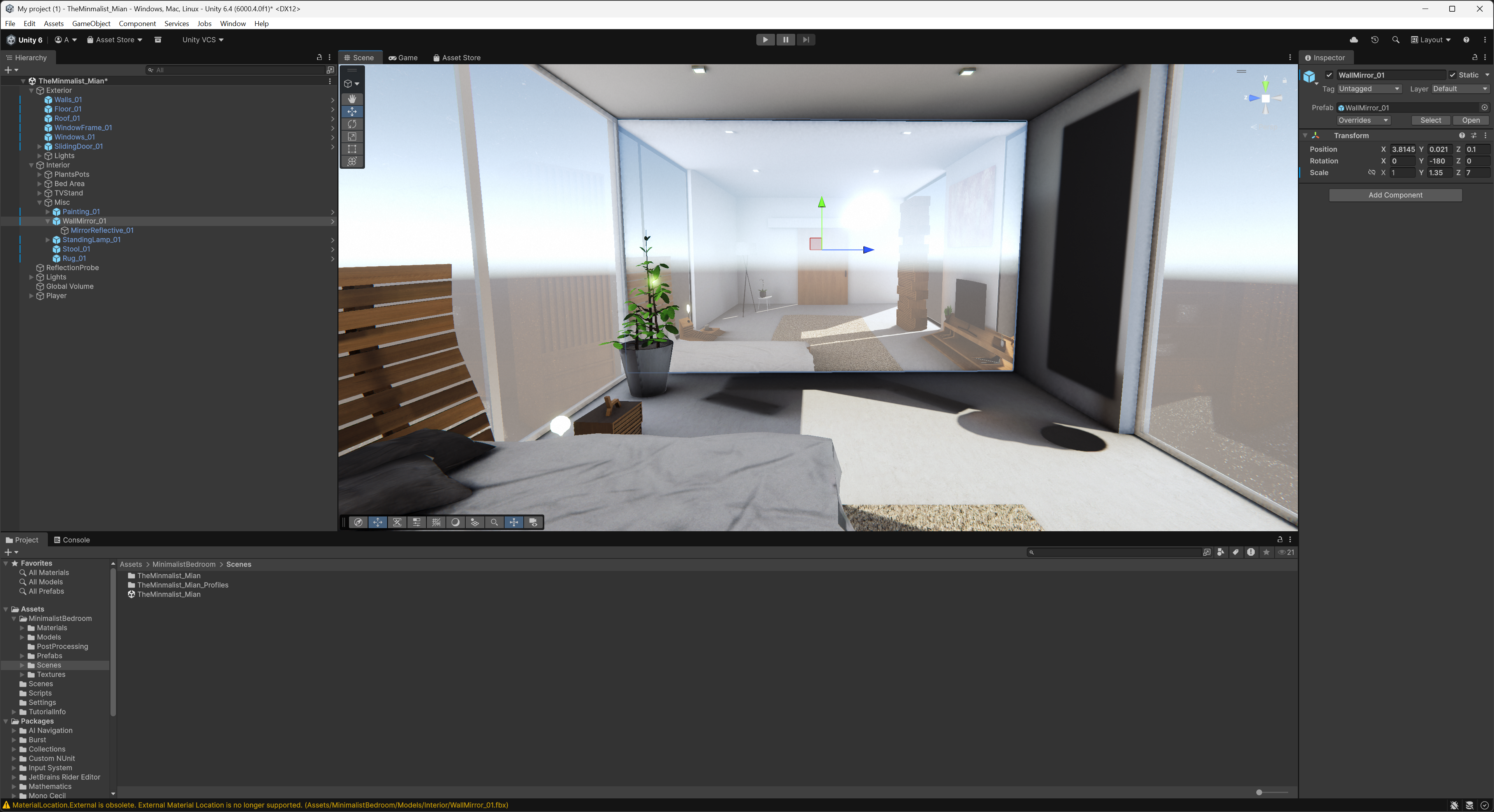
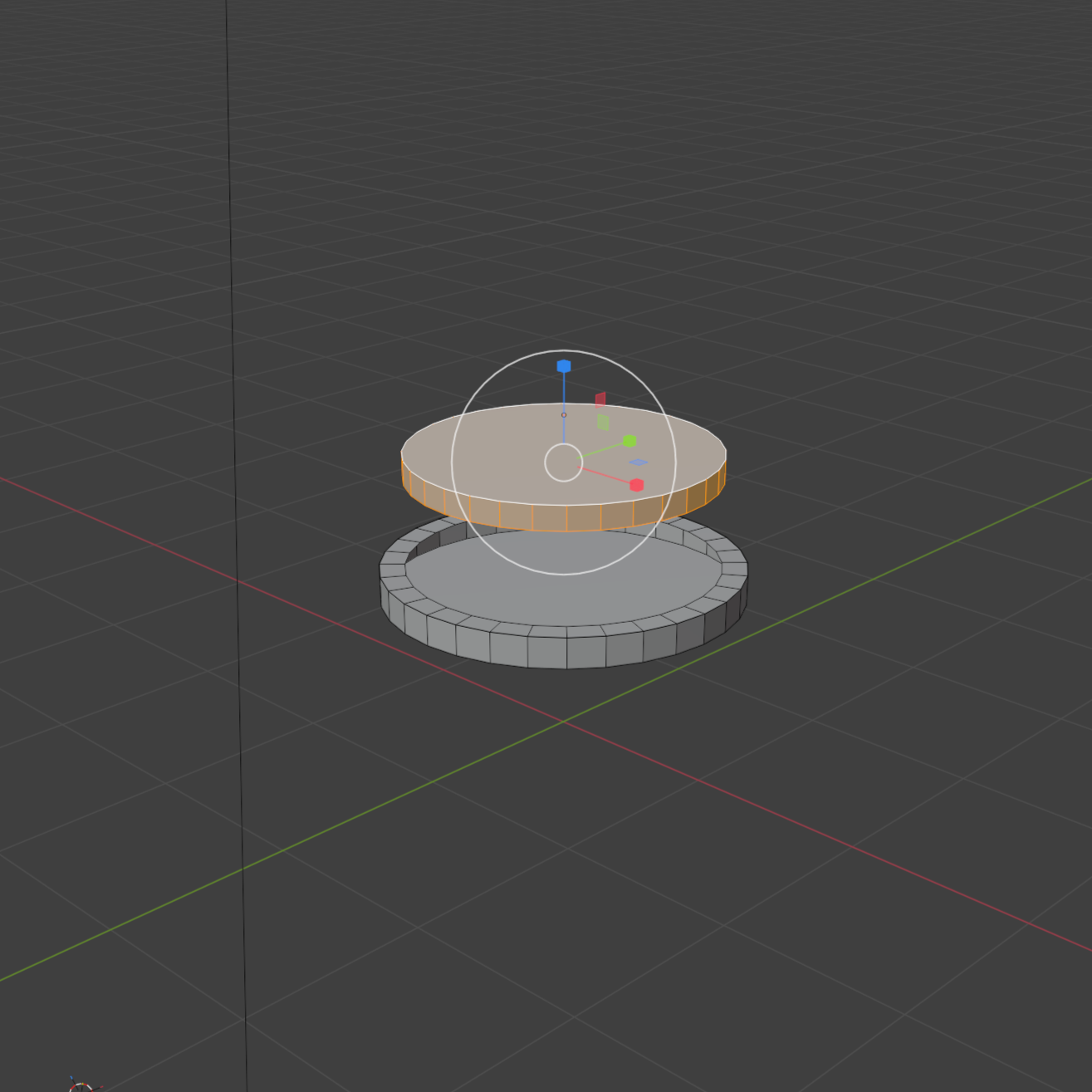
The Eon phone model underwent a critical pipeline shift. While I began the industrial modeling in Spline, I encountered export limitations regarding the .obj format. To ensure compatibility with Unity, I transitioned the workflow to Blender to recreate the asset. This pivot allowed for a cleaner integration into the Unity environment and provided a deeper understanding of the 3D production pipeline.
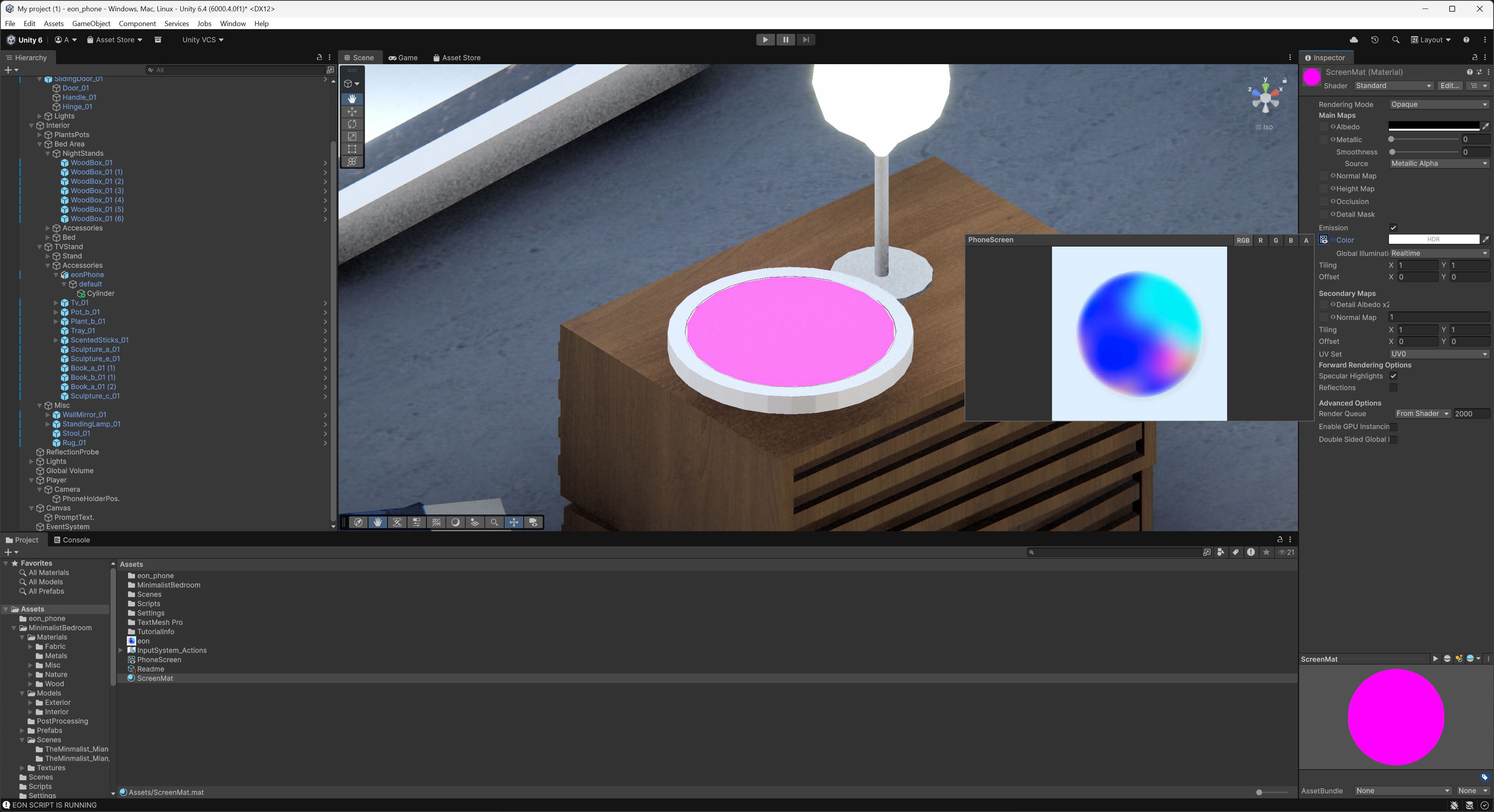
With the environment set, I moved into interaction scripting. Utilizing Claude 4.5 for preliminary logic, I refined several C# scripts to execute the specific behaviors of the Eon system. The interaction architecture is built on three pillars:
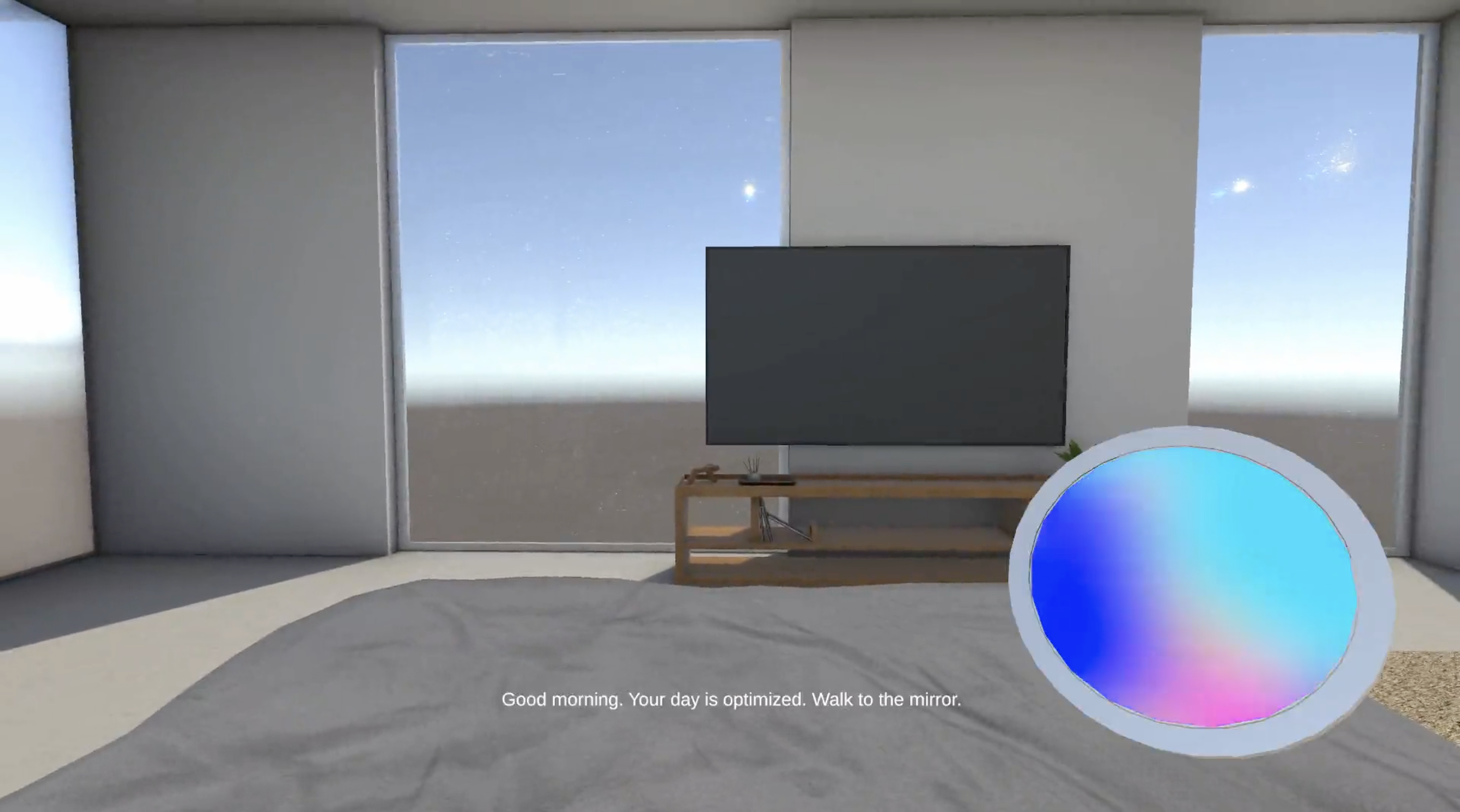
The initial interaction occurs through a standard keyboard input (E) that simulates the user checking the Eon device. This acts as the "hand-shaking" moment between the physical device and the digital agent, signaling readiness to the system.
Phone Toggle (E Key Trigger)
void TogglePhone()
{
    phoneIsOut = !phoneIsOut;

    if (eonPhone != null)
        eonPhone.SetActive(phoneIsOut);

    if (phoneIsOut && step == 0)
    {
        step = 1;
        SetPrompt("Good morning. Your day is optimized. Walk to the mirror.");
    }
}
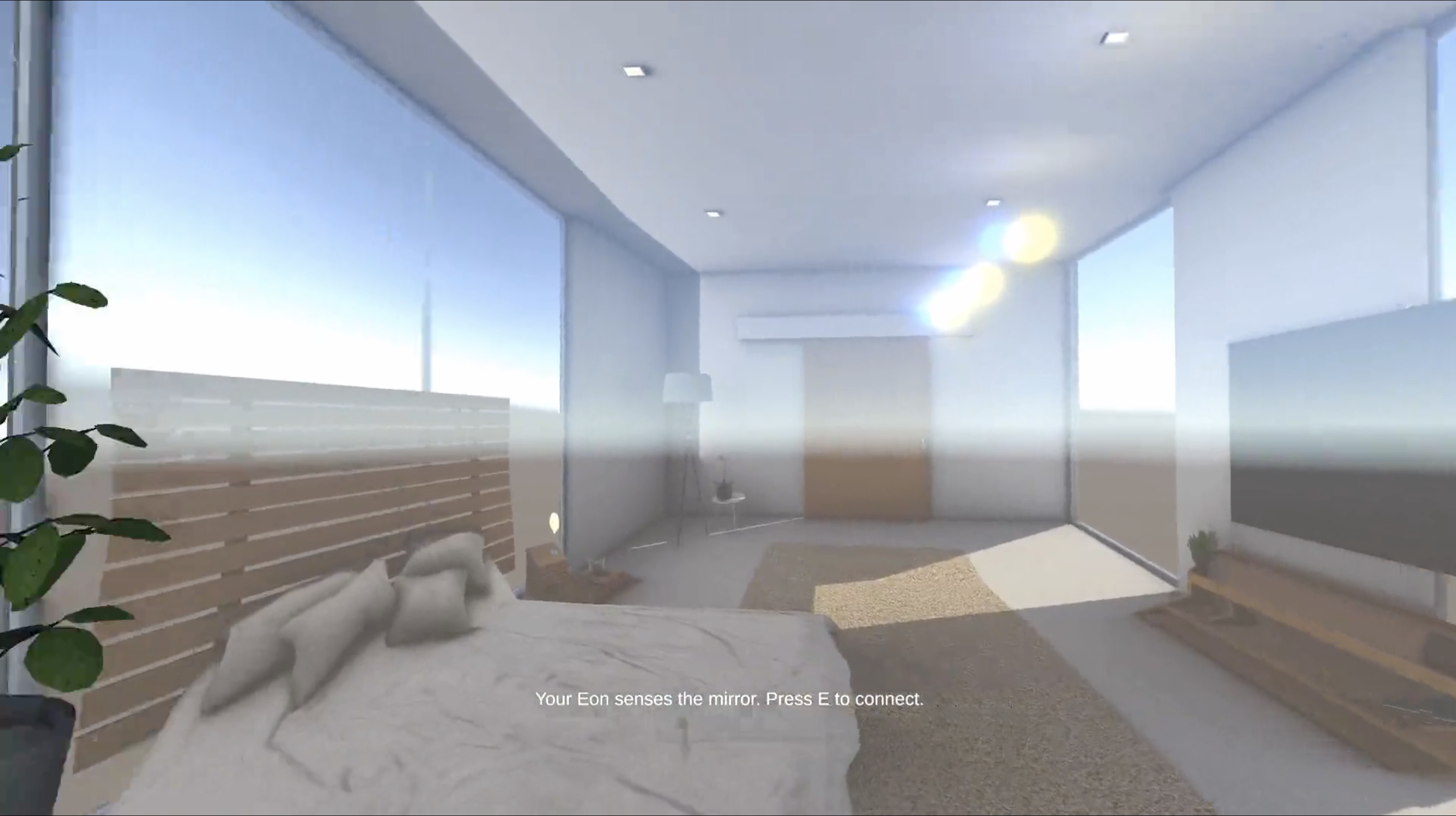
A core moment in the scene is the spatial response triggered by the user's proximity to the bedroom mirror. This is handled via a Unity Trigger Volume that detects the player’s presence, initiating a UI overlay within the mirror's "surface." This interaction demonstrates how Eon transforms existing physical furniture into a temporary interface.
if (mirrorTransform != null && !mirrorActivated)
{
    float dist = Vector3.Distance(transform.position, mirrorTransform.position);
    if (dist < mirrorTriggerDistance && !mirrorBuzzPlayed)
    {
        mirrorBuzzPlayed = true;
        if (hapticBuzz != null) hapticBuzz.Play();
        SetPrompt("Your Eon senses the mirror. Press E to connect.");
    }

    if (mirrorBuzzPlayed && phoneIsOut && dist < mirrorTriggerDistance)
    {
        ActivateMirror();
    }
}

The simulation concludes with a timed event: the arrival of an autonomous vehicle. This is a system-driven response to the earlier "sync" moment. It showcases agentic computing where the "management" of life happens in the background while the user remains physically present in their space.
if (mirrorActivated && !carArrived)
{
    carTimer += Time.deltaTime;
    if (carTimer >= carDelay)
    {
        CarArrived();
    }
}

void CarArrived()
{
    carArrived = true;
    if (carNotification != null) carNotification.SetActive(true);
    if (hapticBuzz != null) hapticBuzz.Play();
    SetPrompt("Your autonomous car has arrived. Walk to the door.");
}

Final Scene
Agentic Operation and Phygital Multimodality
The operational model of Eon centers on a strict command and release architecture. System behavior is dictated by intentional physical activation, ensuring the user maintains agency when the assistant engages. Eon leverages agentic capabilities to process complex, multi-step tasks in the background without requiring continuous user oversight. This establishes a true phygital multimodality. The device acts as a digital key to physical environments, communicating with spatial systems rather than trapping the user within a localized graphical user interface.
Living with Eon
Living with Eon requires a transition from constant active device management to ambient delegation. The video shows a Unity spatial simulation that demonstrates this shift through a speculative morning routine.